Why Watercolor Botanical Clip Art is a Designer's Secret Weapon
There's a certain magic in the way watercolor bleeds and blooms on paper. It's organic, slightly unpredictable, and carries an inherent warmth that digital precision often struggles to replicate. This is precisely the feeling that a well-crafted collection of Watercolor Botanical Clip Art brings to the digital workspace. It's more than just a set of graphics; it's a curated toolkit of organic texture and natural elegance designed to inject life and authenticity into a wide array of projects. For designers, entrepreneurs, and creators, understanding its potential is like unlocking a new level of creative expression.
The Anatomy of a Versatile Design Asset
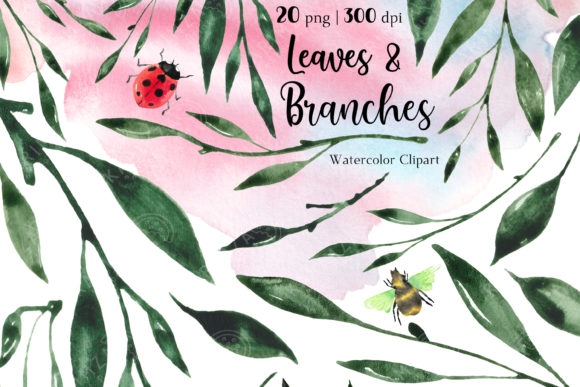
At its core, this collection offers a blend of scale and detail that's genuinely practical. You have the grand statements—the branch graphics. These pieces, often reaching 1500 to 2700 pixels in length, are the workhorses for creating immersive backgrounds, elegant borders, and striking hero imagery. At 300 DPI, they're perfectly suited for both high-resolution print and crisp digital display, ensuring your designs look professional whether on a wedding invitation or a website banner. The seamless background files are a particular time-saver, allowing for the quick creation of patterns and textures without the hassle of manual tiling.
Then there are the small leaves and accent pieces. Ranging from 500 to 1000 pixels, these are the detail-oriented elements. They excel in logo design as delicate flourishes, in editorial layouts as subtle dividers, or in packaging design as clustered motifs. The true strength of this watercolor botanical clip art lies in this thoughtful combination of large-scale elements and intricate details, giving you a full visual vocabulary to work with. The style itself—soft edges, translucent layers, and a palette that feels pulled from nature—conveys a sense of calm, artistry, and approachability.
Where Nature Meets Strategy: Practical Applications
Knowing you have beautiful assets is one thing; knowing where to deploy them effectively is another. This is where the real-world value shines. For a brand strategist crafting a new identity, these botanicals are gold. Imagine a boutique skincare company or an artisanal tea brand. Using the branch graphics as a foundational element in their brand identity system—from the logo to the packaging design—immediately communicates an ethos of natural ingredients, care, and craftsmanship. The watercolor style feels handmade and trustworthy, which is a powerful perception to build.
For publishers and bloggers, the applications are equally potent. A food blogger can use the seamless backgrounds to create a cohesive and appetizing look for their recipe cards and social media graphics. A novelist or poet can use a delicate branch as a chapter header ornament in their book's interior design, enhancing the reader's experience. In web design, a carefully placed botanical element can soften a grid-heavy layout, guide the user's eye, and make a site feel more welcoming and less sterile. The key is to use these graphics not as mere decoration, but as integral components of the visual hierarchy, supporting the content rather than overwhelming it.
Making It Work: A Practical Guide for Your Projects
Integrating a new set of design assets requires a bit of strategic thinking. First, consider the project's voice. Is it romantic and serene, or earthy and robust? The color palette within the watercolor botanical clip art collection will guide you. A project leaning towards sophistication might utilize muted greens and slate blues, while a celebratory piece could embrace vibrant pinks and coral accents.
Next, think about pairing. These botanicals have a distinct organic personality, so they harmonize beautifully with clean, structured typefaces. For a modern, editorial look, pair a bold sans serif font for headlines with the botanicals as a background texture. For something more classic and elegant, a refined serif font for body text creates a lovely contrast with the fluid watercolor shapes. If the project calls for a personal touch, a complementary script or handwritten font can be used for accents, but readability should always be the priority, especially for longer text blocks.
Always test your chosen elements at the intended size. A large branch that looks stunning as a full-page bleed might lose its impact if scaled down to a tiny icon. Conversely, a small leaf cluster might become a blurry mess if stretched too large. Review the included files—are there enough variations in leaf direction and branch shape to create a dynamic, non-repetitive composition? Finally, and crucially, verify the licensing. For any commercial use, whether for a client's logo design, product packaging, or marketing materials, ensure the license permits it. This due diligence protects you and your clients and ensures your professional integrity.
In the end, a collection like this is an invitation to play and experiment. It bridges the gap between the handmade and the digital, offering a way to create designs that feel both personal and polished. By understanding its components and thinking strategically about its application, you can transform standard projects into memorable visual experiences that resonate with your audience on a deeper level. It’s not just about adding pretty pictures; it’s about weaving a story through texture, color, and form.